
Cryogenic Angle Relief Valves: Function and Specification
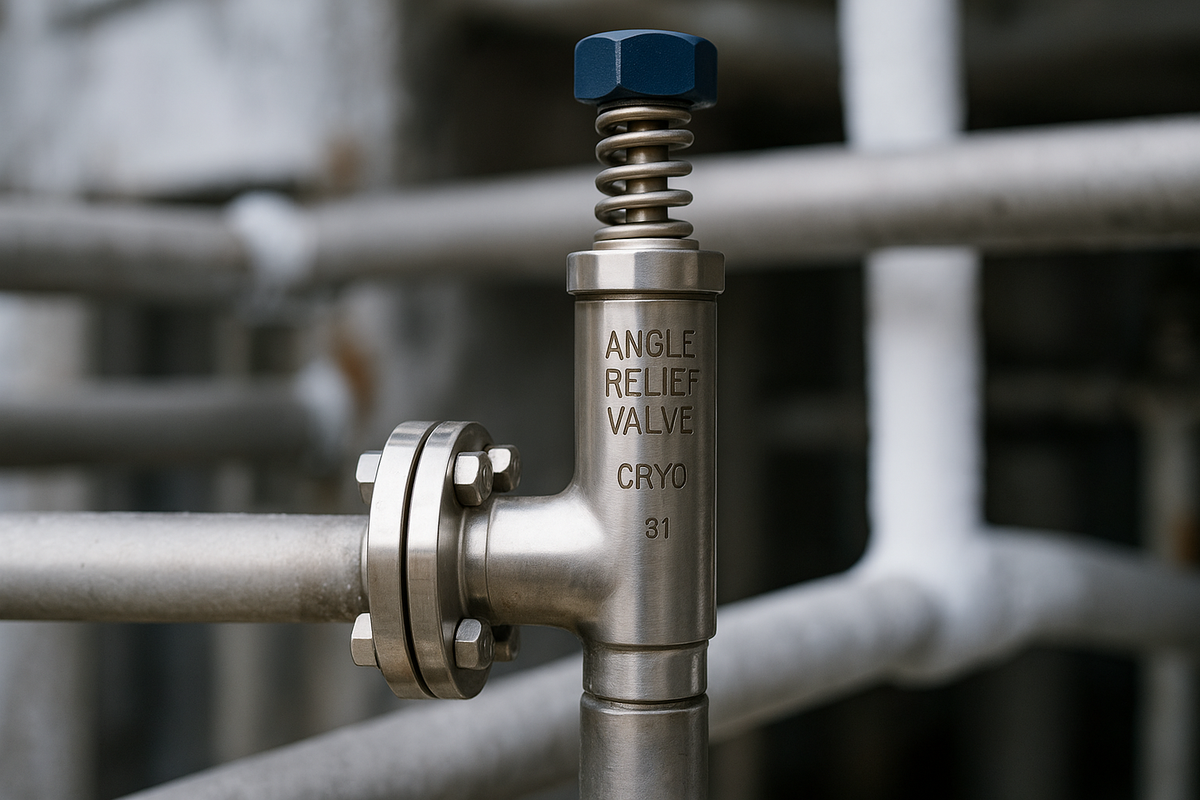
A cryogenic angle relief valve is a pressure-relief device with a particular inlet/outlet arrangement. Its geometry does not determine its set pressure, relief capacity or suitability for a specific fluid. Those must be confirmed from the exact model documentation.
What pressure relief does
A suitable relief device opens under its specified pressure conditions to protect designated equipment. It is different from a regulator that controls normal operating pressure and from a valve that isolates a supply path.
Specify the protected equipment
- Fluid, phase and operating temperature.
- Protected vessel or pipe section and design limits.
- Required set pressure and permitted conditions.
- Required relief capacity and sizing basis.
- Inlet/outlet connections and discharge conditions.
- Required materials, cleanliness and certification.
An angle pattern can affect pipe routing, but the relief system’s discharge arrangement must still follow the approved design. Do not select a device on the basis of fitting into a compact space.
Oxygen and other cryogenic service
Confirm the manufacturer’s permitted fluid and cleanliness requirements. A valve intended for one cryogen is not automatically suitable for every other cryogenic service.
Maintenance and replacement
Use the complete model and pressure-setting identification when requesting a replacement. Do not field-adjust or test a relief valve from instructions in a general article. Follow the manufacturer’s procedure and the responsible qualified service provider’s requirements.
GASNEEDS can prepare an equipment quotation from a nameplate, datasheet and designer-confirmed duty. Final relief sizing and system arrangement require qualified engineering review.
Related guides
- Essential Cryogenic Valves: Relief Valves, Shutoff Valves, Regulators & More
- Are Cryo Regulators Right for Your Cryogenic System?
Equipment and enquiries
angle relief valve cryo · relief valves cryo.
Request a gas-equipment quotation with the application, model reference where known, operating requirements, quantity and delivery location.
Sources and further technical reading
General equipment-selection information. Confirm the exact model documentation and applicable project requirements with qualified personnel before selection, installation or adjustment.